Tokushima Trash Troubles

Arely+Frida+Katya+Joyce

July 29th

Clearing Your Worries Away...

One of the most surprising things to some when living in Japan is the way that Japan deals with trash. You hear plenty of warnings before arriving about the strict trash separation laws, but it can still feel overwhelming when you aren’t used to it. Many of us come from countries where garbage pick-up is very relaxed or easy. So, sometimes knowing what to do with your everyday trash or large furniture you no longer need becomes a challenge you didn’t know you were going to face, complicating already stressful moving out procedures or simple upgrades to your home. To make disposing of large goods or purchasing larger items even more difficult, you may find yourself running into the problem of figuring out how to transport the items if your car is not large enough for the item.

In this post we will go over our experience renting a kei truck, selling and buying furniture from used stores, ways to get large trash picked up from your home, and an example of taking your trash to the dump. Hopefully by the end of this post you’ll be more confident in your ability to dispose of your trash as well as pick up new goods!

Old to New

There are many shops where you can sell your used goods. Bigger examples that sell/buy large furniture include Ecotown or Recycle Shop UP in Aizumi. You can also sell goods at any of the -off stores—Hardoff, Bookoff, or Hobbyoff—although what kind of goods they sell varies by store location. Hobby and Bookoff are generally good for collector items, plushies, books, DVDs and CDs, games, figures, and other hobby related material. Hardoff usually has more home goods, furniture, appliances, electronics, and the like. These are just general guidelines, though; some Bookoffs sell clothes, while many others don’t. 

When you take an item to the selling counter, the staff will look at the item, its original value, and its condition. Then based on the age, store, and damage, they will purchase usually at a much lower price. If the damage is less, the offer may be higher. If it’s covered in various scratches, stains, rips, tears, etc. they may not even offer any money at all and refuse the item. They will also have you fill out a form with your name and information in Japanese. In the case they do refuse the item, you will have to take the item back with you and try again somewhere else.

If you do choose to sell your item here, it’s important that it’s in basically pristine condition if you are looking to get a somewhat decent return on the item. Having the box, manual, etc. helps increase the item’s value. 

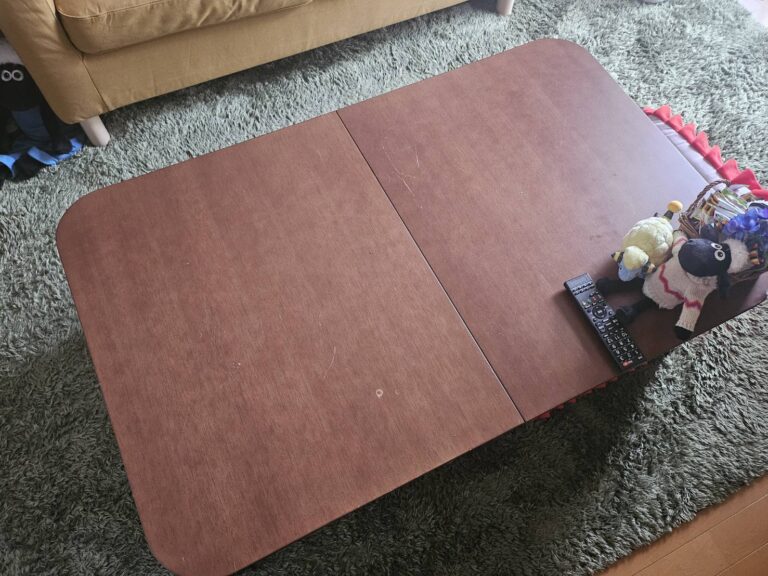
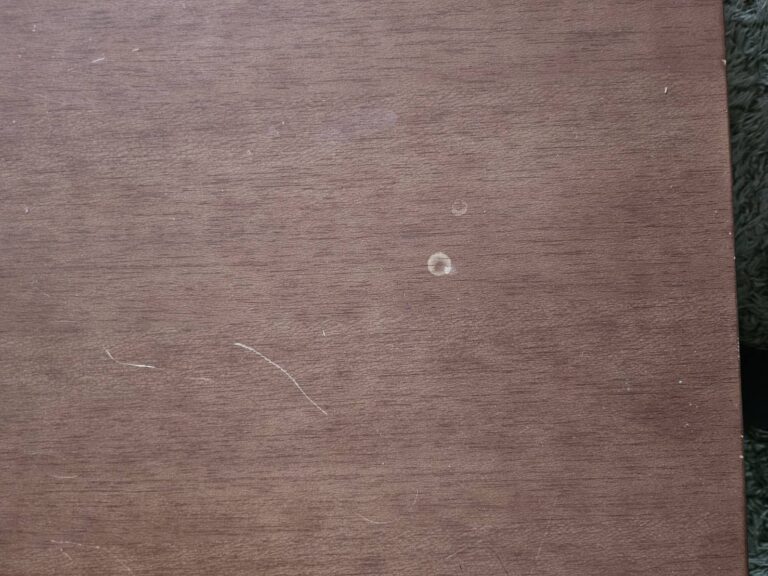
As an example, here’s an extending coffee table to ecotown, one that was purchased in 2024 from Nitori retailed at around 11,000 yen originally. Due to some surface scratches and stains from isopropyl alcohol, Ecotown only offered 1,000 yen for the item.

The other option for selling of course is by advertising in the Tokushima JET line or discord chat. People do often come and go so it’s not uncommon to advertise furniture and appliances to those who might be looking. It’s helpful to put your items in a google doc with the prices you are hoping for.

AJET also often puts on a swap and sell meet up in July for current JETs and another sometime after new JETs arrive. If you happen to be selling around those dates anyway and can go, that might be a good chance to sell or pick up some things for usually a decent discount.


In addition to selling old items, you can also purchase furniture from different recycle shops such as Recycle Shop UP. The process was simple here, you shop around for the pieces you want, have an employee come and take the tag to process the purchase at the register. Then, once it’s been purchased they will move the furniture you bought to the front whilst you prepare your car or truck for loading. Even though it seems to be common sense, make sure to bring your cash with you as they will not hold anything for you until after the transaction has been made. If you have to withdraw more cash, the item you have your eye on may be sold even in that short timeframe.

Hauling Your Load

Have you ever found yourself in need of moving heavy furniture and lacking a U-Haul truck while in Japan? Don’t worry, because Japan has the next best thing: the kei truck! While renting a kei truck may seem like a daunting task, it is actually quite a simple process, albeit with a few requirements.

First, you’ll need to decide where you want to rent a kei truck from. Each rental car company has different rates and different types of vehicles available. There is a large concentration of rent-a-car agencies near Tokushima Airport, as well as various other locations in or near the city. Some examples of companies that rent kei trucks include Niconico Rent-A-Car and Guts Rent-A-Car. Not every car rental agency has kei trucks available, or they may have a limited number, so it’s important to choose your location carefully and try to book in advance. 

In most cases, you can make a reservation online through the rental agency’s website. You’ll need to designate the store location for pick-up and drop-off, as well as the date and time. Usually you can do a one-day rental and get a flat fee for 7 or 8 hours. Fees for one day might range between ¥4000~6000. Make sure you return the rental car on time so you don’t get charged extra! 

If you’ve made an online reservation, you can just go to the counter at/just before the time you designated and tell them you have a reservation. The staff will have you present your driver’s license and sign off on insurance forms before taking you to the car and showing you how to operate it. However, there are some stipulations you might want to look out for.

In some cases, you must have had a Japanese driver’s license for at least a year to rent the car. There are, of course, some companies that will let you rent a car with only an IDP, or that don’t care how long you’ve had the Japanese license. Still, you might find yourself in a situation where you’ve already booked the truck and arranged to pick up furniture, only to find out that your totally valid driver’s license is just short of being accepted by the rental company’s insurance policy. (Dear reader, your author speaks from experience!) It’s always important to read each company’s policies carefully and make sure you’ll be able to drive the car with whatever license you have. Worst case, bring a senpai with you as a backup driver in case a Japanese license or a 1-year-old license is necessary.

Another situation you should look out for is borrowing a kei truck from a friend. It’s very convenient if you have a friend with a kei truck who can drive you around to pick up furniture. However, if you’re going to be the one driving, the truck owner may want you to get one-day insurance. Getting one-day insurance is a simple process that can be done at Lawson as long as you have all the vehicle information. However, you cannot get one-day insurance on a kei truck. (Again, dear reader, this author found this out the hard way.) Driving your friend’s kei truck might seem like a cheat code to save money and time, but it’s never recommended to drive any car without insurance, and the owner probably wouldn’t be comfortable letting you drive it uninsured anyway. If you’re going to borrow a friend’s truck, let them know that the owner has to be the one driving it! 

After you’ve picked up the car, it should be smooth sailing! As always, be sure to follow all Japanese road laws and drive carefully. The car rental comes with one-day accident coverage insurance, but in the case of a bad accident, you’ll still be required to pay for property damage past whatever the insurance covers. Take a second to familiarize yourself with the new car, adjust your mirrors, and always account for the extra weight that will be added by whatever furniture you’re transporting. Usually when you rent a kei truck, it will come with a rope that can be used to tie down everything in the truck bed so it doesn’t fly out while driving. Drive safely, soak in your time LARPing as an ojii-san in the inaka, and enjoy all the new furniture you can bring home!

Large Trash Pick-up

This will be a general coverage of trash pick up, as well as the more specific on how to request larger forms of trash to be picked up and removed. There are generally three things to be aware of when preparing to dispose of trash in Japan: town trash bags, rotating trash days, and trash separation. 

Trash Bags

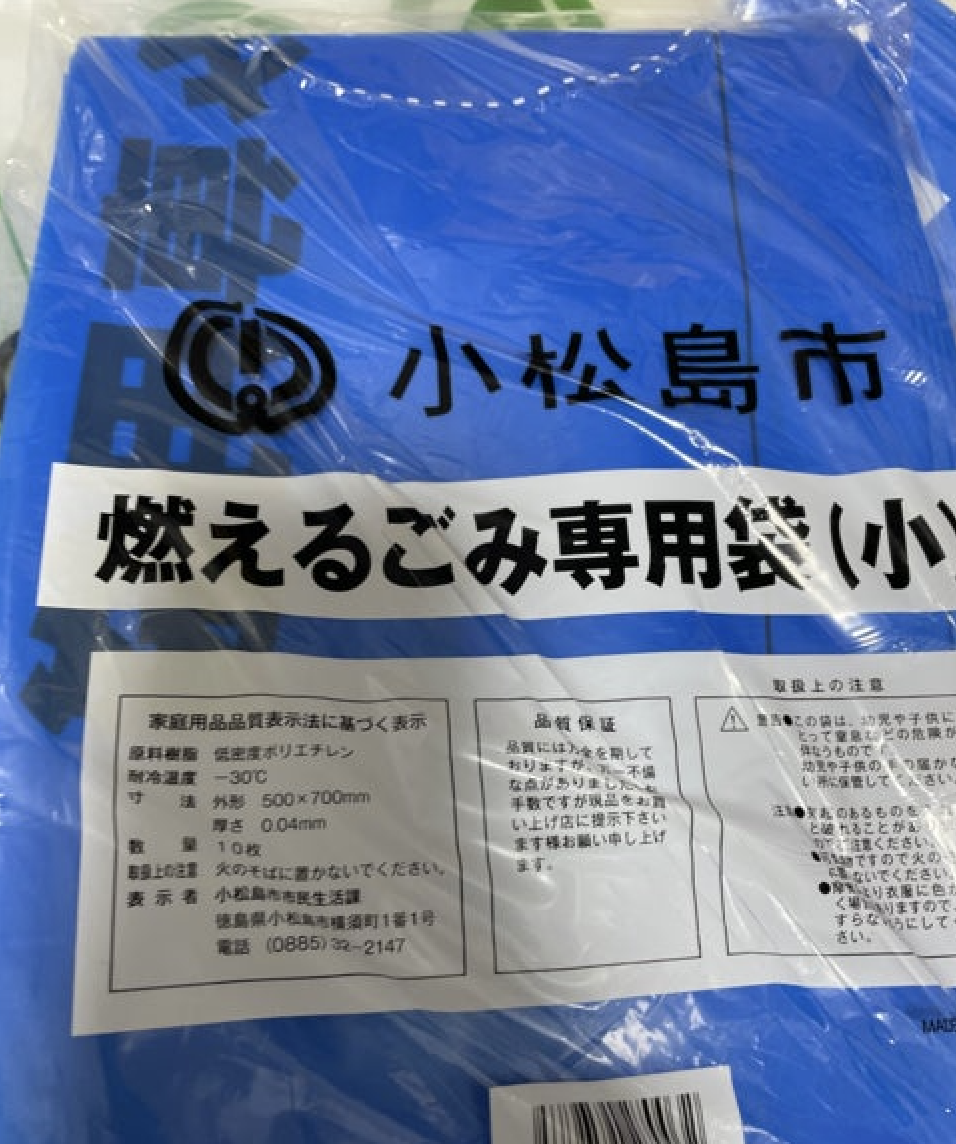
Firstly, it’s important to determine whether your town has designated trash bags that it requires you to use. Generally, these are labeled or coloured bags to help indicate what kind of trash is in them. These are the Komatsushima burnable trash bags. They are blue, while the ones for plastics are clear with green text. Make sure you are using the right bag for the right trash!

Now that you know what bags you can use, it’s important to review the trash schedule and rules for your specific town. Some towns in Tokushima don’t separate burnable trash and plastic, for example. Other towns can be quite fickle about separating even components of an object into separate categories.

When your trash gets picked up from your house or building, the trash is usually inspected. If a bag has incorrect trash inserted, they will usually attach a note with reasoning saying so. Once it’s fixed, it will be picked up the next time that trash day comes around. To talk more specifically about the types of categories of trash, we will be using Komatsushima as a basis for what you can expect.

Separating and Throwing Away Trash

In Komatsushima, we have these divisions of separation:

  • Burnable trash
  • Plastic trash
  • Plastic bottles
  • Metals
  • Aluminum and glass
  • Cardboard
  • Newspaper/magazine
  • Coated paper

⭐︎ ● Fun Fact! ● ⭐︎

Residents of Kamikatsu are home to a town that’s zero waste! So the degrees of separation there add up to around 45 unique categories.

Residents sort their trash at a trash station in town. 

Generally, these categories are more or less the basic ones that you will see. Furthermore, towns are usually broken down into different regions for trash schedules if they are large enough, meaning that different regions put their trash out on different days. Usually, in the mail you will receive the trash schedule for your area, but if you lose it, you are likely able to find your town’s trash schedule online via the city’s website or the links below.

For example, looking at the Komatsushima trash map, you can see there are three different regions for the trash schedules in the Northern area of Komatsushima. After finding your neighbourhood, you can determine your schedule, so one should only put specific trash out on the night before or morning of the days outlined on your trash schedule. Using the example on the right, assuming we live in region two of the Northern region of Komatsushima, during July, you would use this schedule according to the website. (When you can put out your trash for trash days depends on the rules of your building most of the time).

But as you will read in the dump section, taking trash or unwanted furniture to the dump can sometimes cost you. Is there a way to have furniture picked up from your house and taken to trash? The answer is, as always, it depends. At least in Komatsushima, you can request to have larger items like beds, desks, tables, couches, etc. picked up on a designated day every other month. Most towns follow this example, requiring you to submit a request online or through the phone detailing the size, weight, and type of item so they know how many people to prepare. This number or trash request portal is usually posted on the trash schedule page itself, the trash separation guide page, or somewhere on the trash section area of the website (links are below for the trash separation guides that could be found for each town).

The bigger difference is whether or not you will have to pay to have it picked up. Some towns I’ve heard require you to buy a special sticker from a home goods or adjacent store, costing about 1,200 yen or more depending on the size, which then you stick onto the item to show you’ve paid the fee. Komatsushima is fortunate to grant free pickup. So be sure to read the website thoroughly or call with questions to determine if there is a fee you are expected to pay or not.

Although it is convenient to have furniture and trash picked up by request, it’s recommended to first pursue the avenue of selling your goods back to a thrift or recycling shop in your town or surrounding area IF your item lacks any major damage. Even though most of the time you get only a little back, you do keep the item from going to waste and are hopefully extending its life!

For the last part of this section, all the trash separation guides that could be sourced for all cities, towns, and villages in Tokushima. Most yearly trash schedules are posted as a notice on your city’s website every year with slight changes, so those won’t be linked to the schedules or neighbourhood divisions themselves. But for the cities that do have a trash separation guide posted, the link will be available below. Some towns also have a trash app available! *Be aware these are also subject to change as well, so make sure to double check if you are unsure.

To search for your schedule, typing “[City Name] ゴミカレンダー [Current Year]” into a search engine usually yields results.

Trash Separation Guides


  • Itano
    • You will have to click into the regional schedule to see what the trash separations are like.
  • Kamiita
    • Kamiita doesn’t seem to have a guide book but this is a list of items and their categories
  • Kaiyo
  • Tsurugi
  • Naka
  • Minami
  • Katsuura
    • Katsuura also does not seem to have a specific guidebook for trash sorting though there is a small guide about the different trash categories on this page.
  • Kamiyama
    • Scroll down to see the categories
  • Mugi
    • You can add Mugi Town as a friend on LINE to ask specific questions about what trash goes into what category as well as view the guide online.
  • Kamikatsu
  • Sanagochi

To the Dump!

For bulk waste that you can’t put out with your regular trash, you can bring them to a dump that can dispose of it for you. As of writing this article, the only dump we are aware of in Tokushima that accepts drive-ins is the Naruto Clean Center. 

HOURS:   

Weekdays: 8:30AM – 4:30AM 

2nd Saturday of every month: 8:30AM – 12:00PM 

The Naruto Clean Center accepts all bulky waste and electronics that are not covered by the Home Appliance Recycling Law. 

Here is the list of items that CANNOT be sent to the Naruto Clean Center: 

  • Agricultural chemicals (pesticides, herbicides, etc.) 
  • Agricultural machinery 
  • Automobiles (and parts)
  • Blocks
  • Brick
  • Cement 
  • Commercial-use air conditioners 
  • Commercial-use refrigerators/freezers 
  • Concrete
  • Construction waste 
  • Fire extinguishers 
  • Gas cylinders 
  • Gypsum boards (plasterboards) 
  • Hazardous chemicals 
  • Household altars
  • Household shrines 
  • Liquid items 
  • Medical waste 
  • Mortar
  • Motorcycles (and parts)
  • Personal computers 
  • Roof tiles 
  • Stones, soil, sand 
  • Tires (cars and motorcycles) 

If what you want to get rid of is not listed above, chances are that the Naruto Clean Center can take it! If you still want to make sure, you can always call them and ask here: 0886837570

It is important to note that you do need to have a car to go to the center. They weigh your car when you enter and exit the center as a way to determine how much waste you brought and how much to charge you.

The process itself is very simple and quick! 

General Processing Fee

Regular bulk waste: ¥70 per 10kg

Bicycle: ¥500 per item 

Household Electronics (Small): ¥500 per item 

Household Electronics (Large): ¥3,000 per item

When you first enter the center, the person at the gate will stop you to ask you to sign a form in which you list your name and address. This is also when they weigh your car the first time. Then they will direct you to follow a set of arrows that will lead you to a warehouse where staff will take the waste from your car. When everything has been taken out, they will tell you to keep following the arrows that will then lead you to the exit (same location as the entrance). Your car will be weighed a second time here. This is also where you pay the processing fees. And then you’re done! Home free.

But what about those who are trying to get rid of things the center doesn’t accept?

For Household Appliances

  • If you know which store the appliance was purchased from, you can contact the store directly and have them pick it up. You will have to pay a “recycling” and “transportation and collection” fee to the store. 
  • You can also go directly to a collection site. To do this, you would first have to pay a “recycling fee” at a post office and bring the documents you receive to the collection site. You will need to call the collection site in advance to see when you can bring the appliances in. 

For Personal Computers:  

  • If you know the manufacturer: please contact them directly 
  • If you don’t know, or there is no manufacturer: please contact the PC 3R Promotion Association. 
  • You can also request a courier to collect the PC from you here: https://www.renet.jp/ 
  • Other options include selling the PC to a second-hand shop or electronics retail store. 


*Please note that most of these options will include a recycling fee so make sure to check! 

Collection Centers in Tokushima

Recycling fees will vary depending on the type and size of the appliance(s) you are trying to get rid of. If you want information on the specifics, please visit the Home Appliance Recycling Center’s site: https://www.rkc.aeha.or.jp/ 

  • You can also call them at: 0120319640


For items that haven’t been discussed here, you can look up your city’s specific requirements for how to dispose of them.

But what about those who don’t have the time or a car to make the trip to the center?

No worries! If you don’t have any means of getting there, you can always request for a direct pick up. As stated in the Trash Pickup section and previously in this section, the specifics vary depending on your city but generally there should be a way for you to put in a pick up request with a disposal service.  


The recommendation is to always first try the store/manufacturer of whatever you are trying to dispose of. Or if you are replacing it with a new item, the store you are buying the replacement from might offer collection services as well. These options will most likely charge you extra “collection and transportation” fees. 


There are also private companies that offer pick-up services as well. You can find those through an online search of your city’s name and “trash pick up services” or “disposal companies”.

It can be difficult to deal with leaving procedures and the like whilst figuring out where and how to take your old items out, and it can be just as difficult to upgrade pieces in your home as you continue to live in Japan. Hopefully this mini guide helps you navigate the wide world of trash collection in Japan!